Floating or Static Nails: Which Sadhu Board Is Better to Choose?
Once you have more or less figured out the nail spacing, the next important question is: which Sadhu boards are better — with floating or static nails? And it really is a strong question, because this is where the choice stops being “by the picture” and becomes a real understanding of how the board will feel in practice.
'/><circle cx='1040' cy='60' r='160' fill='rgba(255,255,255,0.06)'/><circle cx='140' cy='350' r='200' fill='rgba(255,255,255,0.04)'/><text x='70' y='150' fill='white' font-family='Arial' font-size='50' font-weight='700'>Плаваючі чи статичні цвяхи?</text><text x='70' y='220' fill='%23f0d8b0' font-family='Arial' font-size='34' font-weight='700'>Яку дошку Садху краще обрати</text><text x='70' y='288' fill='rgba(255,255,255,0.86)' font-family='Arial' font-size='24'>Різниця у відчуттях, комфорті, довговічності та виборі для старту</text></svg>)
In this article I will explain:
- what static nails on a Sadhu board are;
- what floating nails are and how they work;
- how the sensations differ;
- which option is better for a beginner;
- what to choose for yourself, as a gift or for working with people.
What static nails on a Sadhu board are
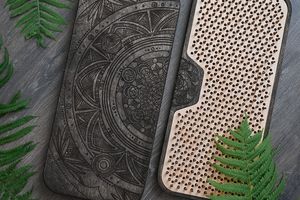
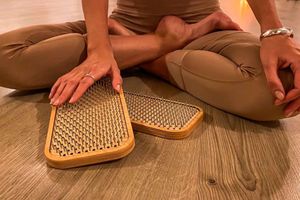
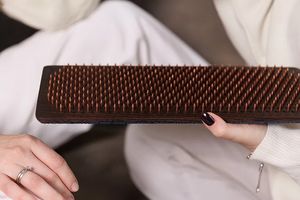
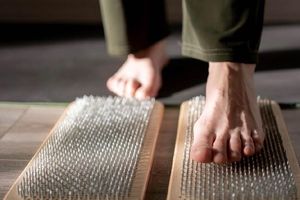
Static nails are the classic format. They are rigidly fixed in the base and do not move. This is exactly what most people imagine when they hear the words “Sadhu board”.
Pros of static nails
- a classic, proven format;
- a simple and reliable design;
- these boards are very durable;
- the sensations are direct, clear and predictable.
Who static nails suit
- those who want a classic Sadhu board;
- those who like clear, direct sensations in practice;
- those who are not looking for extra “softness”;
- those who want the simplest and most reliable design.
What floating nails on a Sadhu board are
Floating nails are a format in which each nail has some travel and can move slightly within the structure. When you stand on the board, these nails partly adapt to the anatomy of your foot.
That is why the METADESK website has a separate category of Sadhu boards with floating nails. It is not just “another type of fixing”, but a separate request from people who want a more comfortable or interesting practice format.
Pros of floating nails
- for many people the board feels softer;
- the foot touches more points;
- getting into the practice is often more comfortable;
- practice leaders and those who put others on the board like this option.
Who floating nails suit
- beginners who are afraid of a too harsh first experience;
- those who want the most comfortable start to the practice;
- those who like softer or more “alive” sensations;
- those who work with people and put others on the nails.
'/><text x='70' y='120' fill='%231a1a1a' font-family='Arial' font-size='46' font-weight='700'>Статичні — це класика</text><text x='70' y='180' fill='%234d4336' font-family='Arial' font-size='30'>Плаваючі — це інший рівень комфорту</text><text x='70' y='245' fill='%234d4336' font-family='Arial' font-size='24'>Обидва варіанти працюють, але відчуваються по-різному</text></svg>)
The main difference in sensations
This is what interests people most. Not how the mechanism looks, but how it will feel in real practice.
Simply put:
- static nails give a more direct, stable and classic contact;
- floating nails often give a softer start and adapt better to the foot.
This does not mean that one option is “better” for everyone. It means that people have different needs.
If a person says: “I want a classic board without extra nuances” — static nails are often closer to them. If a person says: “I want to get into the practice more comfortably” — the floating format often resonates.
Which is better for a beginner: floating or static
There is no single answer for everyone, but there is a very clear logic.
If a beginner:
- is very afraid of pain;
- hesitates for a long time before buying;
- wants the softest possible start;
- feels it is important to “enter the practice gradually”,
— then floating nails are often a good option.
If a person:
- wants the classic format;
- likes clarity and simple solutions;
- does not want to overpay for mechanics;
- is fine with more direct contact with the board,
— then static nails will also be an excellent choice.
For a beginner, the most important factor is still not the type of nails but the right nail spacing. If the spacing is chosen wrongly, even the most expensive design will not give the right start.
What to choose for yourself if you want one good board for a long time
If you simply want a good board for yourself and do not plan to work with others, the choice often depends on your character and how you like to practice.
| Request | What usually fits | Why |
|---|---|---|
| I want the classic | Static nails | A simple, reliable, clear design and classic sensations. |
| I want a more comfortable start | Floating nails | They often give a softer start and adapt better to the foot. |
| I am afraid it will hurt a lot | Floating or smaller spacing | Here it is important to reduce fear and choose the right starting format. |
| I want the most reliable classic option | Static nails | Minimum mechanics, maximum classic. |
What to choose for working with people
If you lead practices, put others on the nails or want a board not only for yourself but also for group sessions, floating nails often look like a very logical solution.
Why? Because people are different. Some have sensitive feet, some strong fear, some a tense body. And in this format the floating mechanism often helps a person get through the first experience more easily.
What about the nail material and the base
It is also important not to get confused here. The type of nails — static or floating — is one thing. The nail material — copper, galvanized, bamboo — is another.
If you like, you can also read on the METADESK website:
- Sadhu boards with copper nails
- Sadhu boards with bamboo nails
- which Sadhu board base material to choose
This is useful because people sometimes think that choosing floating nails also answers the question about the metal and the wood. In fact, these are different levels of choice.
The most common mistakes when choosing
Mistake #1 — thinking floating nails are always better
They are not “better for everyone”. They simply fit a certain need better: comfort, a softer start, working with different people.
Mistake #2 — underestimating static nails
Static boards are not a “cheaper simplified option”, but the classic form of practice that many people love precisely for its directness and clarity.
Mistake #3 — ignoring your level
If you are a beginner and very afraid of pain, you need not the “strongest” option, but the one on which you will actually start practicing.
Mistake #4 — forgetting about nail spacing
The type of nails matters, but the spacing between them often affects the sensations even more.
'/><text x='70' y='120' fill='%23ffffff' font-family='Arial' font-size='48' font-weight='700'>Не існує однієї дошки для всіх</text><text x='70' y='185' fill='%23f2d9ad' font-family='Arial' font-size='30'>Є дошка, яка правильно підходить саме тобі</text><text x='70' y='245' fill='rgba(255,255,255,0.88)' font-family='Arial' font-size='24'>Вибір має спиратися не на міфи, а на твій запит і рівень</text></svg>)
Conclusion
In short:
- static nails — classic, direct sensations, simplicity and reliability;
- floating nails — a more comfortable and often softer way into the practice.
Which is better? The one that fits your needs.
If you want a classic Sadhu board without extra nuances — look at static ones. If you want a more comfortable start, especially for a beginner or for working with people — floating nails can be a very good choice.
Not sure which Sadhu board to choose?
Write to us — and we will help you choose not just a beautiful board, but an option that really fits your experience, level, fear of pain and practice format.
FAQ
What is the difference between floating and static nails on a Sadhu board?
Static nails are rigidly fixed and do not move. Floating nails have some travel and partly adapt to the shape of the foot.
Which is better for a beginner — floating or static nails?
If a beginner is very afraid of pain and wants a more comfortable start, floating nails often suit better. If you want the classic format, static nails are also a great option.
Are floating nails less painful?
For many people yes, because they adapt better to the foot. But overall sensations still depend on the nail spacing and the level of tension in the body.
Are static Sadhu boards more durable?
Thanks to their simpler design, static boards are often seen as the most classic and very reliable option.
Who are floating nails best for?
Beginners, people with a strong fear of pain, and those who work with other people and want a more comfortable practice format.
Quick table: floating or static nails
If you want to understand the difference as quickly as possible, here is a short comparison table.
| Parameter | Static nails | Floating nails | What it means for your choice |
|---|---|---|---|
| Design | Rigidly fixed | Have travel, adapt | Floating nails give a different, more adaptive contact with the foot |
| Sensations | More direct, classic | Often softer at the start | If you need a more comfortable start — look at floating ones |
| For a beginner | Suit if you want the classic | Suit if you fear pain | Consider both your character and your experience |
| For working with people | Possible | Often more convenient | Practice leaders love floating nails |
| Overall recommendation | Classic format | Comfortable format | The choice depends on what you want from the board |
Want to see Sadhu board options right away?
Go to the METADESK catalog and see models with floating nails, classic Sadhu boards, base materials and premium options with copper nails.