
How to Choose a Sadhu Board: The Complete Guide by Yevhen, Founder of METADESK
Today, Sadhu boards have become one of the most popular tools for self-development, meditation, and body awareness. More and more people around the world are discovering the practice of standing on nails.
But when a person comes across this topic for the first time, a lot of questions usually arise:
-
Which Sadhu board should I choose?
-
What nail spacing is better?
-
Will it hurt?
-
What is the difference between copper and galvanized nails?
-
Is a Sadhu board suitable for beginners?
I have been making Sadhu boards for more than 10 years, and during that time our team has created more than 20,000 board sets used by people in 50 countries around the world — from the United States and Canada to Peru, Germany, Poland, Australia, and Japan.
In this article, I will share my experience and explain:
-
how to choose the right Sadhu board
-
which parameters truly matter
-
what mistakes beginners make
-
how to begin the practice without fear.
This will be the most complete guide to choosing a Sadhu board, based on real experience.
What Is a Sadhu Board?

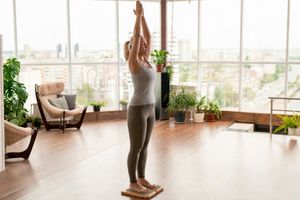
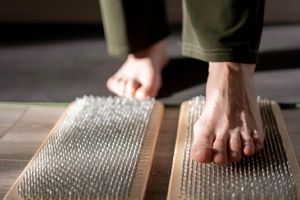
A Sadhu board is a special board with nails that people stand on with bare feet.
This practice comes from ancient spiritual traditions in India, where ascetics (Sadhus) used nails for meditation, inner work, and overcoming fear.
Today, this practice is used for:
-
meditation
-
psychological transformation
-
working through fears
-
stimulating nerve points in the feet
-
foot massage
-
increasing energy.
When a person steps onto a Sadhu board, a huge number of nerve endings in the feet are activated. According to various estimates, there are more than 70,000 nerve points in the feet connected to different organs of the body.
That is why this practice has not only a psychological effect, but a physiological one as well.
Benefits of Standing on a Sadhu Board
Many people search Google for the question:
"What are the benefits of a Sadhu board?"
Here are the main effects most practitioners notice.
Stimulation of Nerve Endings
There are a large number of nerve points in the feet. When a person stands on a Sadhu board, these points are stimulated.
It is similar to a deep reflexology massage.
Improved Blood Circulation
During the practice, blood begins to circulate more actively throughout the body. People often feel warmth in their feet and throughout the body.
This happens because blood starts moving more actively into areas where circulation used to be weaker.
Activation of Lymph Flow
Practitioners’ experience shows that stimulating the feet can significantly activate the lymphatic system.
Lymph flow can increase several times over, which has a positive effect on the body’s cleansing processes.
Stress Relief
During the practice, a person spends time alone with themselves, without a phone and without information overload.
This makes it possible to:
-
calm the mind
-
reduce stress levels
-
feel inner balance.
Why a Sadhu Board Can Change Your Life
This may sound bold, but I have seen many cases where people began changing their lives after this practice.
Standing on nails is not just a physical practice. It is a tool that helps a person look within.
When you stand on nails, discomfort appears. And in that moment, the brain begins to search for solutions.
These are exactly the moments when people often find answers to questions that have been troubling them for a long time.
Many of our customers have shared very different kinds of changes:
-
some found inner peace
-
some made important decisions
-
some changed their lifestyle
-
some experienced improvements in their health.
Of course, a Sadhu board is only a tool. But it is a very powerful one.
My Experience: How I Came to Nail Standing
My story with Sadhu boards began more than 10 years ago.
Before that, I was making Kuznetsov applicators. It was the ECOMAT brand.
At some point, I wanted to try something new. That is when I became interested in the practice of standing on nails.
It took me almost a month to make my first board.
At that time, I knew almost nothing about this topic, but I wanted to make it as high-quality as possible.
It was a black board with 10 mm spacing.
And I remember very clearly the moment I stepped onto it for the first time.
Since then, I have continued exploring this practice.
At one point, I even set myself a challenge — to stand on nails for 80 days in a row.
And my longest practice was 2 hours on a board with 15 mm spacing.
The Biggest Mistake When Choosing a Sadhu Board
In more than 10 years of working with Sadhu boards, I have seen the same mistake thousands of times.
People choose a board based on:
-
color
-
design
-
a beautiful picture
-
advice from friends
but they do not pay attention to the most important parameter — the distance between the nails.
It is the nail spacing that determines:
-
how painful it will be to stand
-
whether you will be able to stand on the board at all
-
whether the practice will feel comfortable
-
whether you will use the board regularly.
So when people ask me:
«How do I choose a Sadhu board?»
I always answer:
👉 Start by choosing the nail spacing.
Everything else is secondary.
Which Nail Spacing Should You Choose?
.png)
The most common nail spacing options used in Sadhu boards are:
-
8 mm
-
10 mm
-
12 mm
-
15 mm
Each option has its own level of difficulty.
Sadhu Board 8 mm — for very cautious beginners
The 8 mm spacing is usually chosen by people who:
-
are very afraid of pain
-
want the gentlest possible start
-
doubt whether they will be able to stand at all.
Often these are women who say:
«I’m really afraid of pain. I want something as easy as possible.»
This type of board really does make it easier to begin the practice, but there is one nuance.
Over time, many people get used to this spacing.
And then they start wanting to move up to a more challenging level.
Sadhu Board 10 mm — the universal option
If you ask me:
«Which Sadhu board should I choose?»
in 80% of cases, I will recommend 10 mm.
It is a universal option that:
-
works well for beginners
-
remains interesting even after years of practice
-
offers a good balance between pain and effect.
Based on our observations, 10 mm is the option most people choose.
It is the option that allows you to:
-
start practicing
-
keep growing
-
not lose interest after a few months.
I personally use 10 mm boards very often, especially with copper or bamboo nails.
Boards with 12–15 mm spacing — for experienced practitioners
A spacing of 12 mm or 15 mm is already a higher difficulty level.
These boards are chosen by people who:
-
have been practicing for a long time
-
love challenges
-
want stronger sensations.
I remember once standing for 2 hours on a board with 15 mm spacing.
It was not a record. It was a challenge to myself.
But I will say honestly — this is difficult for beginners.
So if you are just starting to explore nail standing, it is better to choose 8 or 10 mm.
Which Nails Should You Choose: The Complete Guide

The second important parameter is the material of the nails.
Several types of nails are used in Sadhu boards:
-
galvanized
-
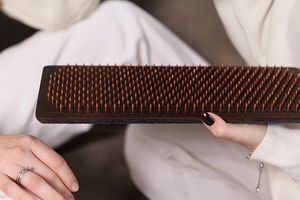
copper-plated
-
copper
-
combined (copper + zinc)
-
bamboo.
Galvanized Nails
This is the most affordable option.
They are perfect:
-
for your first introduction to nail standing
-
for beginners
-
if your budget is limited.
Their downside is that corrosion may appear over time if the board is not cared for properly.
Copper-Plated Nails
This is already the next level of quality.
These nails:
-
have a galvanized base
-
and are additionally coated with a layer of copper.
They look more beautiful and are slightly more durable.
Combined Nails (Copper + Zinc)
This is the option many people choose because of its visual beauty.
Here, rows of the following alternate:
-
copper nails
-
galvanized nails.
The board looks very striking.
Copper Nails
Copper nails are the top choice for durability.
Copper:
-
does not fear corrosion
-
is highly durable
-
has natural antibacterial properties.
In addition, many people believe copper has its own energy.
And although this is difficult to prove scientifically, many practitioners say they can feel it.
Bamboo Nails
This is a very special option.
We hand-turn each bamboo nail.
These boards are:
-
very lightweight
-
compact
-
pleasant to practice on.
I personally love bamboo boards.
They truly make you want to stand on them again and again.
Floating or Static Nails
Another important parameter is the type of nail mounting.
There are two options:
Static nails
The nails are firmly fixed in place and do not move.
Floating nails
Each nail has movement (up to 10 mm).
When a person steps onto the board, the nails adapt to the shape of the foot.
This allows you to:
-
activate more points
-
make the practice gentler
-
distribute the pressure more evenly.
That is why floating nails are often chosen by:
-
beginners
-
practice facilitators
-
people who guide others onto nail boards.
I also often use a board with floating copper nails.
Sadhu Board Shapes
.png)
The shape of the board is more a matter of convenience and aesthetics.
The most popular options are:
-
rectangular
-
oval
-
violin-shaped
-
cloud-shaped.
In reality, the shape does not affect the practice.
So here, it is worth choosing whatever you simply like best.
Most often, people choose:
-
oval boards
-
rectangular boards.
Sadhu Board Material: Plywood or Natural Wood
Another question people often ask before buying is:
What material should I choose for a Sadhu board?
In reality, there are two main options here:
-
plywood
-
natural wood.
The Basic Board: Plywood
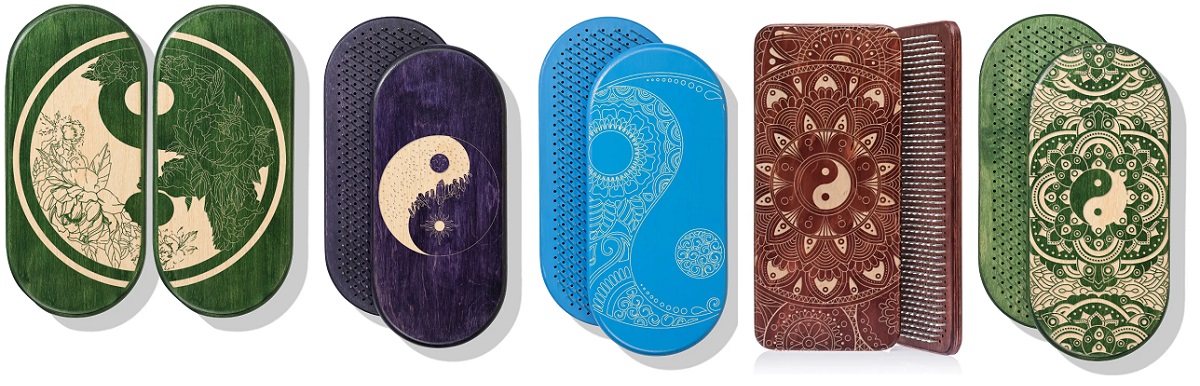
Most people start with a plywood board.
We use high-quality first-grade plywood that holds nails well, does not warp, and lasts for many years.
The main advantage of a plywood board is its affordable price.
It is a great option for:
-
your first practice
-
getting introduced to nail standing
-
a gift.
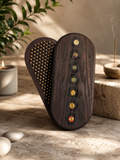
Boards Made from Natural Wood
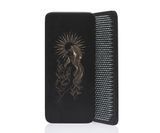
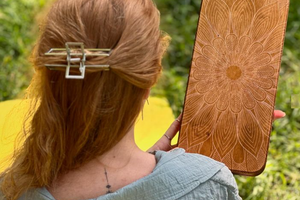
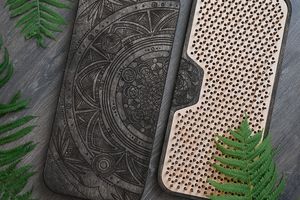
For those who want something more special, we create boards from natural wood.
The most popular options are:
-
oak
-
ash
-
walnut
-
elm.
.png)
These boards have:
-
a beautiful texture
-
the natural energy of wood
-
a more premium look.
Many people say they love feeling the natural strength of wood.
Thermo Ash — One of the Best Options

Personally, one of my favorite materials is thermo ash.
This is specially treated wood that undergoes thermal processing.
As a result, it:
-
becomes very stable
-
has a beautiful dark color
-
looks premium.
If someone asks me:
"Which board should I choose if my budget allows it?"
I often recommend:
👉 floating copper nails + thermo ash + 10 mm spacing
This is one of the best combinations.
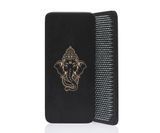
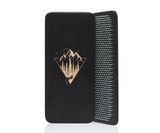
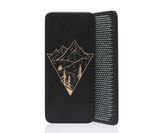
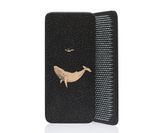
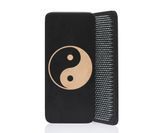
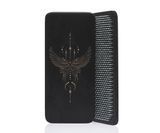
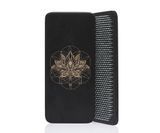
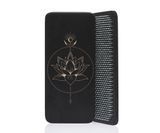
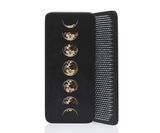
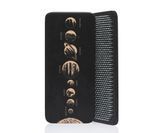
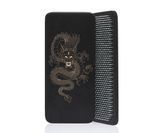
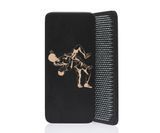
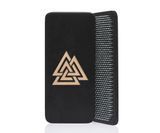
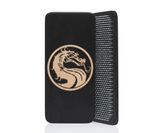
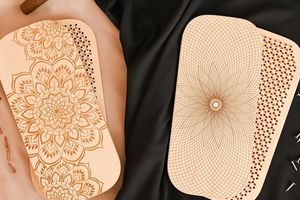
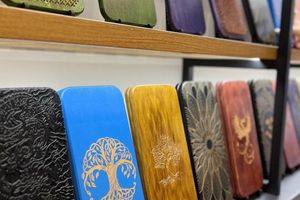
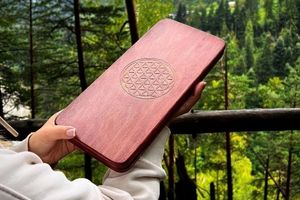
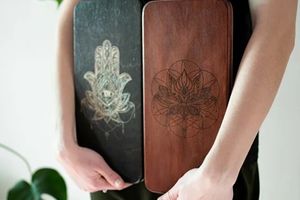
Board Design and Engraving
A Sadhu board is not only a practice tool.
For many people, it becomes a personal source of strength.
That is exactly why design matters.
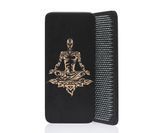
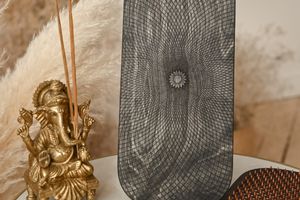
Our catalog includes more than 350 engraving options.

These can include:
-
sacred geometry
-
symbols
-
mandalas
-
inscriptions
-
phrases.
We also create custom designs if a person wants:
-
their own text
-
their own symbol
-
personalized engraving.
Some people even create unique boards, where we:
-
combine different types of wood
-
insert crystals
-
create artistic painting
-
add carved milling details.
As a result, the board becomes truly personal.
Nail Layout: Diamond, Square, or Hexagon
.jpg)
This is another parameter people are often interested in.
The nails on a board can be arranged in different patterns:
-
diamond
-
square
-
hexagon (flower of life).
We manufacture boards with all of these options.
But based on our observations, people most often choose the diamond nail layout.
I personally also practice on boards like these most often.
How to Step onto a Sadhu Board for the First Time
The biggest fear beginners have is:
"How do I actually step onto the board for the first time?"
There are a few simple recommendations.
1. Prepare the Atmosphere
Before the practice, it is important to create the right state.
You can:
-
turn on calm music
-
take a few deep breaths
-
put your phone away.
This helps you focus.
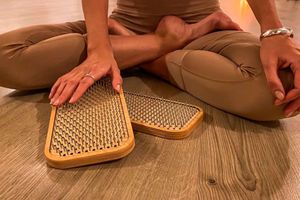
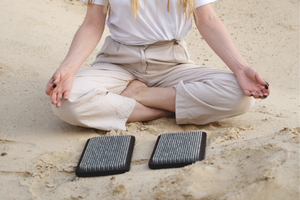
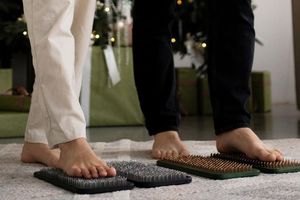
2. Place the Boards in Front of You
The boards should be placed approximately shoulder-width apart.
Usually, a comfortable distance between them is 5–10 cm.
3. Step on Slowly
There is no need to jump onto the board.
Step on:
-
first with one foot
-
then with the other.
4. Your First Practice Can Be Very Short
The first time, you can stand for even just 30 seconds.
That is normal.
Over time, your practice can become longer.
A full practice usually starts from 7 minutes.
Why Standing on Nails Hurts
This is a question almost all beginners ask.
The first few minutes can feel quite intense.
There are several reasons for this.
The Brain Reacts to an Unfamiliar Stimulus
Our brain is not used to this kind of stimulation.
So it may send the signal:
"This is dangerous, I need to step off."
But after a few minutes, the brain realizes that the body is not actually in danger.
And the pain begins to decrease.
The Body Adapts
Many people notice that after 5–6 minutes, the pain almost disappears.
This is connected with the fact that:
-
the body adapts
-
blood circulation becomes more active
-
the nervous system calms down.
Common Mistakes Beginners Make
Over the years, I have seen many typical situations.
Mistake #1 — choosing a board that is too difficult
Sometimes people watch videos on Instagram and think:
"This is easy."
But when they buy a board with 15 mm spacing, it turns out that standing on it is very difficult.
Mistake #2 — looking for the problem in the board
Sometimes people find it hard to stand, and they start thinking that the problem is with the board.
I remember cases where people found one nail on the board that was 1 mm higher or lower and thought that was the reason they could not stand on it.
But in reality, the issue was fear.
And when the person overcame it, the practice started working out.
Mistake #3 — expecting instant results
A Sadhu board is a tool.
But transformation happens when a person works with themselves consistently.