
Which Sadhu Board Should a Beginner Choose: 8 mm or 10 mm?
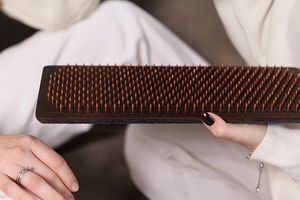
When someone is about to buy their first Sadhu board, one question almost always comes up: which nail spacing should you choose — 8 mm or 10 mm? And it’s the right question, because the distance between the nails has the biggest impact on how the board will feel, whether you’ll be able to start comfortably, and whether you’ll stick with the practice after the first few days.
'/><circle cx='1040' cy='60' r='160' fill='rgba(255,255,255,0.06)'/><circle cx='140' cy='350' r='200' fill='rgba(255,255,255,0.04)'/><text x='70' y='150' fill='white' font-family='Arial' font-size='52' font-weight='700'>Sadhu Board for Beginners</text><text x='70' y='220' fill='%23f0d8b0' font-family='Arial' font-size='40' font-weight='700'>8 mm or 10 mm — which to choose?</text><text x='70' y='290' fill='rgba(255,255,255,0.86)' font-family='Arial' font-size='24'>Simple explanation, no confusion and no fluff</text></svg>)
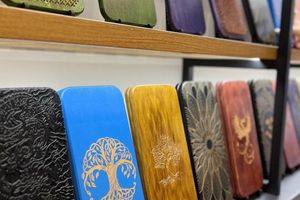
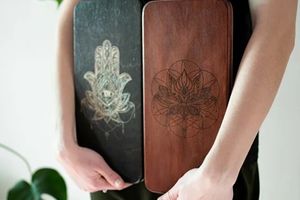
When people look at Sadhu boards, they often focus first on color, design, shape, or wood type. But for a beginner, all of that is secondary. The most important factor is the spacing between the nails.
This is what determines how intense the sensations will be, whether you’ll feel afraid to step on the board, whether you’ll practice regularly, and whether the board will feel too easy or too difficult for a proper start.
Why nail spacing is the key factor
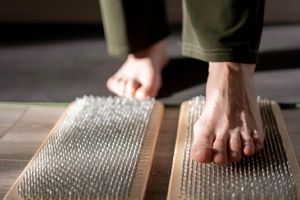
When you step on a Sadhu board for the first time, your body and mind don’t react to the color, shape, or type of wood. They respond to the density and distance between pressure points.
That’s exactly what determines:
- how painful or tolerable it feels;
- whether you can relax during practice;
- whether you get scared on your first attempt;
- whether you’ll want to come back to the board again.
.jpg)
8 mm Sadhu board: who is it for
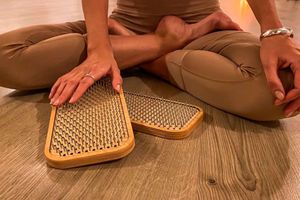
Simply put, 8 mm is for those who want to enter the practice as gently as possible. It’s most often chosen by people who:
- are very afraid of pain;
- have a low pain tolerance;
- are unsure if they can stand on nails at all;
- want a smoother first experience.
Pros of an 8 mm Sadhu board
- easier psychologically to take the first step;
- more contact points with the feet;
- the sensation feels softer;
- great for a very cautious start.
Cons of an 8 mm Sadhu board
There’s one important nuance: many people get used to 8 mm quite quickly. It feels very comfortable at the beginning, but over time you may start craving a more intense experience.
10 mm Sadhu board: why it’s the universal choice
If someone asks me which Sadhu board to choose as a beginner, in most cases I recommend 10 mm. It offers the best balance between comfort, intensity, and long-term progress.
A 10 mm Sadhu board is ideal for those who:
- want not just to try, but to actually practice;
- want one good board for the long run;
- are looking for a universal option without quickly outgrowing it;
- want both comfort and meaningful depth of sensation.
Pros of a 10 mm Sadhu board
- suitable for most beginners;
- doesn’t become too easy too quickly;
- works well for both women and men;
- remains effective even after months or years of practice.
'/><text x='70' y='120' fill='%23ffffff' font-family='Arial' font-size='50' font-weight='700'>10 mm — universal choice</text><text x='70' y='185' fill='%23f2d9ad' font-family='Arial' font-size='30'>for most people starting out</text><text x='70' y='245' fill='rgba(255,255,255,0.88)' font-family='Arial' font-size='24'>softer than it seems at first</text><text x='70' y='285' fill='rgba(255,255,255,0.88)' font-family='Arial' font-size='24'>and still engaging over time</text></svg>)
8 mm vs 10 mm: quick comparison
| Parameter | 8 mm | 10 mm |
|---|---|---|
| Best for | Those who are very afraid of pain | Most beginners |
| Initial ощущения | Softer | More noticeable but comfortable for most |
| Adaptation speed | Faster | Slower |
| Versatility | Lower | Higher |
| Recommendation | If you have a strong fear of pain | If you want a long-term universal board |
Which one should you choose
Choose 8 mm if:
- you are genuinely afraid of pain;
- you hesitate a lot;
- you want the smoothest possible entry into the practice;
- you need an easier psychological start.
Choose 10 mm if:
- you want a universal option;
- you plan to use the board long-term;
- you don’t want to switch boards after 2–3 months;
- you’re looking for a balance between comfort and progress.
Common beginner mistakes
Mistake #1 — choosing based only on appearance
People focus on color, engraving, or shape, but ignore nail spacing — and end up choosing the wrong option.
Mistake #2 — going too advanced too soon
Some beginners want something “serious” right away and look at 12 or 15 mm. But in most cases, that’s too intense for a first experience.
Mistake #3 — being afraid of 10 mm
Many think 10 mm is too harsh. In reality, it’s the best starting point for most people unless there’s a strong fear of pain.
Conclusion
If you’re wondering which Sadhu board to start with — 8 mm or 10 mm, here’s the simplest answer:
- 8 mm — if you want the softest possible start and are very afraid of pain;
- 10 mm — if you want a universal option that lasts longer and doesn’t become too easy too quickly.
For most people, 10 mm is the best starting choice. But if you know you have a high fear of pain, 8 mm is also a perfectly valid option.
Not sure which board is right for you?
Message us — we’ll help you choose the right nail spacing, nail material, and board base for your needs. This way, you won’t be guessing — you’ll choose a Sadhu board that truly fits you.
Frequently asked questions
Which Sadhu board is better for beginners — 8 mm or 10 mm?
Both can work, but 8 mm is a softer start, while 10 mm is a more universal and long-term option.
Can I start directly with 10 mm?
Yes. In most cases, 10 mm is the best starting option if you want to actually practice, not just try it once.
When should I choose 8 mm?
If you have a strong fear of pain or want the gentlest possible entry into the practice.
Do people get used to 8 mm quickly?
Yes, many people adapt to 8 mm faster, which is why they often move to a more intense option later.
Is 12 mm suitable for beginners?
Usually, 12 mm and above are better suited for those who already have some experience or intentionally want a stronger challenge.